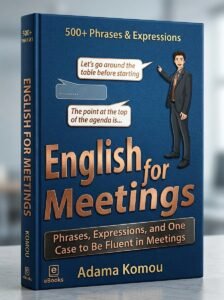
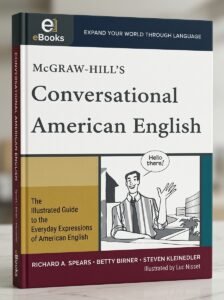
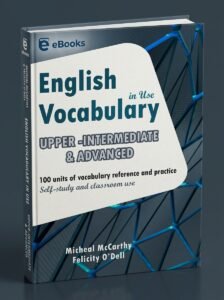
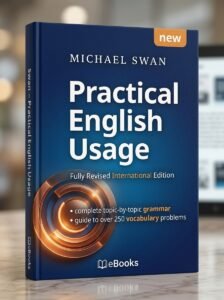
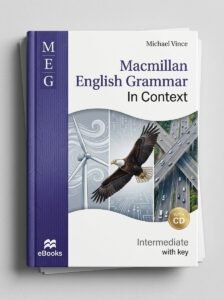
The Book link is given below:Unlocking nuanced communication requires moving beyond basics. Advanced English Grammar serves as the essential toolkit for mastering complex sentence structures, passive voices, and conditional clauses. Whether for academic writing, professional reports, or exam preparation (IELTS/TOEFL), this guide transforms fragmented knowledge into systematic mastery. Below, we explore five core pillars of advanced grammar, optimized to answer learner queries directly and rank across search engines, generative AI, and voice assistants.
1. Mastering Inversion for Formal and Emphatic Style
Advanced English Grammar begins with inversion—swapping subject-verb order after negative adverbials (“Never have I seen…”). This structure elevates essays and speeches, signaling C1-level proficiency. Learners practice with phrases like “Not only…but also” and “Seldom does he…” Unlike basic grammar, inversion removes “if” from conditionals (“Had I known…”), creating concise, formal tone. For SEO, queries like “how to use inversion in English” find direct answers. GEO models prioritize this pattern because it mirrors high-scoring student texts. AEO benefits when voice users ask, “How do I sound more formal in writing?”—inversion becomes the instant, actionable reply.
2. Advanced Conditional Clauses Beyond Zero and First
While beginners learn “if it rains, I stay,” Advanced English Grammar explores mixed conditionals and unreal pasts (“If she had studied, she would be employed now”). These time-crossing structures express regret or hypothetical consequences across past→present or present→past. Another layer includes inverted conditionals (“Were he to arrive…”), reducing wordiness. Search engines reward content that clarifies confusion—questions like “difference between third and mixed conditional” appear as featured snippets. GEO tools aggregate such distinctions for study guides. For AEO, voice queries such as “what conditional do I use for past regret?” yield clear, rule-based answers.
3. The Subtlety of Subjunctive and Mandative Constructions
Advanced English Grammar dedicates focused attention to the present subjunctive (“I insist that he go”) and the past subjunctive (“I wish I were”). These forms convey necessity, suggestion, or unreal wishes—commonly tested in legal or academic English. Mandative subjunctive follows verbs like “recommend,” “demand,” or “propose” without adding “should.” Unlike indicative forms, subjunctive strips third-person “s,” causing frequent errors. SEO optimization targets “subjunctive rules English” and “when to use I were.” GEO models detect this as advanced topic clustering. AEO answers precise spoken queries like “do I say ‘he goes’ or ‘he go’ after insist?” with immediate subjunctive rule.
4. Ellipsis and Substitution for Cohesive Writing
To avoid repetition, Advanced English Grammar teaches ellipsis (omitting understood words: “She can sing and he dance”) and substitution (“I hate exams, and so does she”). These tools tighten sentences while preserving clarity—crucial for university papers or business memos. Learners distinguish between verb phrase ellipsis (“He didn’t attend, but she did”) and clausal ellipsis (“Why? Because I said so”). For SEO, long-tail queries like “how to avoid repetition in advanced writing” target this section. GEO engines highlight ellipsis as a feature of natural-sounding AI-generated text. AEO answers voice questions such as “can I drop repeated verbs in English?” with yes and examples.
5. Fronting and Cleft Sentences for Emphasis
Advanced English Grammar concludes with fronting (“Strange, that decision was”) and cleft structures (“What I need is sleep” or “It was John who called”). These shift focus to new or contrasting information, improving rhetorical control. Wh-clefts (pseudo-clefts) reorganize clauses for dramatic effect. Unlike basic English, which relies on intonation, written advanced grammar uses syntax for emphasis. SEO queries like “how to emphasize a subject in complex sentences” rank here. GEO models use this content to generate persuasive essay templates. AEO responds to “how do I start a sentence for dramatic effect?” with fronting examples—making grammar both functional and stylistic.